Hello, and thanks for reading my newsletter on the things I’ve noticed, enjoyed, and spent time drawing lately, according to the seasons.
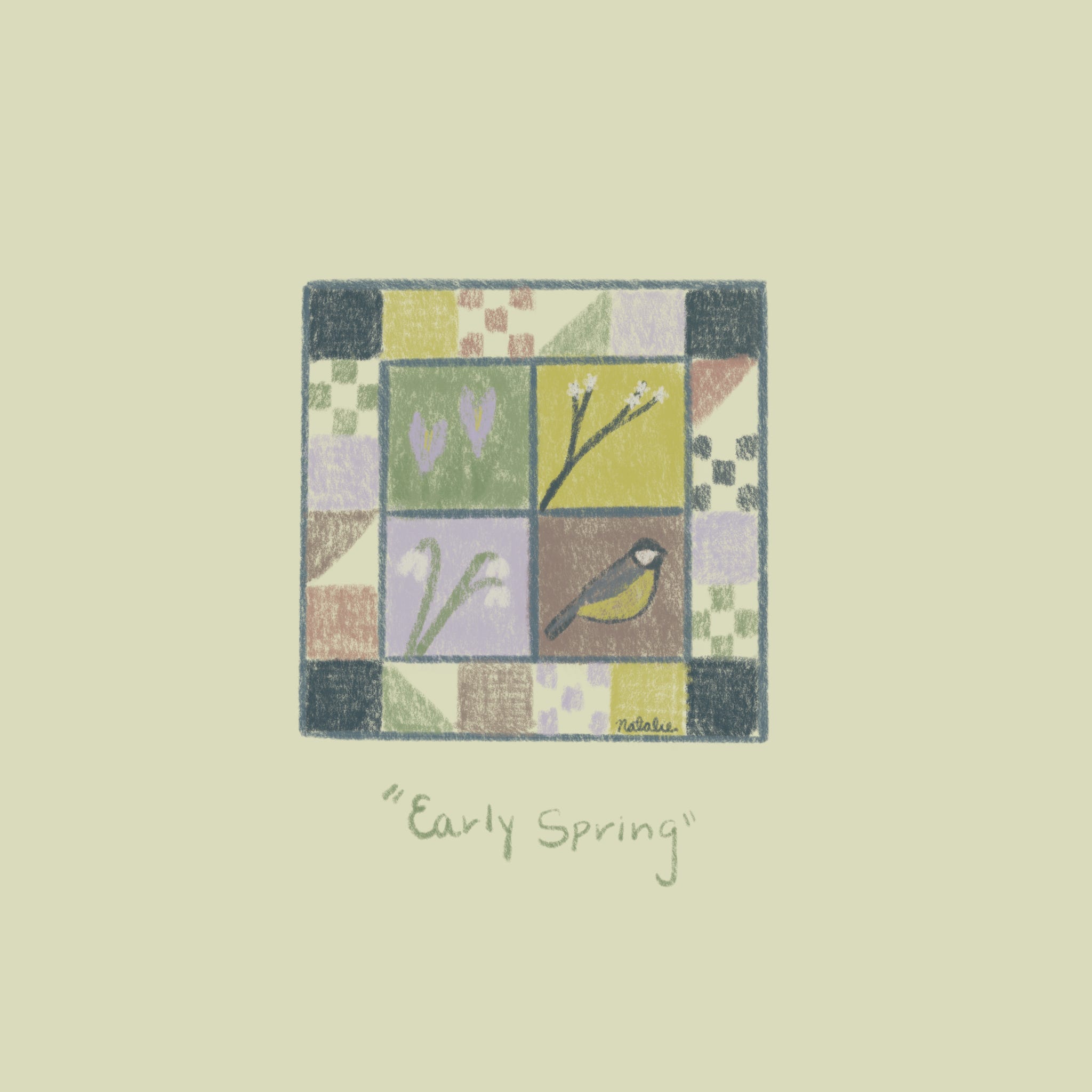
I send these letters out every fortnight (every three microseasons, if you want to get technical), with about 6 newsletters a season. You’re reading the second installment of Spring - I call this ‘Early Spring’, or the Japanese season Usui - ‘Rainwater’.
As said in the previous installment, I’ve rearranged things a bit, trying them on for size. Thanks for the positive feedback!

Early Spring has been the step that feels well in the right direction, towards warmer and more sun-filled days.
I took a walk on a sunny Saturday and wrote in my sketchbook: “The first day of the year where my whole self wants to be in this fresh air and sunshine”.
I feel like I’m waking up a bit, remembering the pleasure of walking outside, without the winter chill. We’re not quite there - it’s still rather cold, and I’ve regretted too-optimistically forgoing the hat - but it feels on its way.
There are so many notables from this sekki that they won’t all fit in the confines of the newsletter - the Water of Leith has taken on the scent of its growing leeks. The birds are finding their voice again. The sunlight stretches further. The trees erupt in budburst.
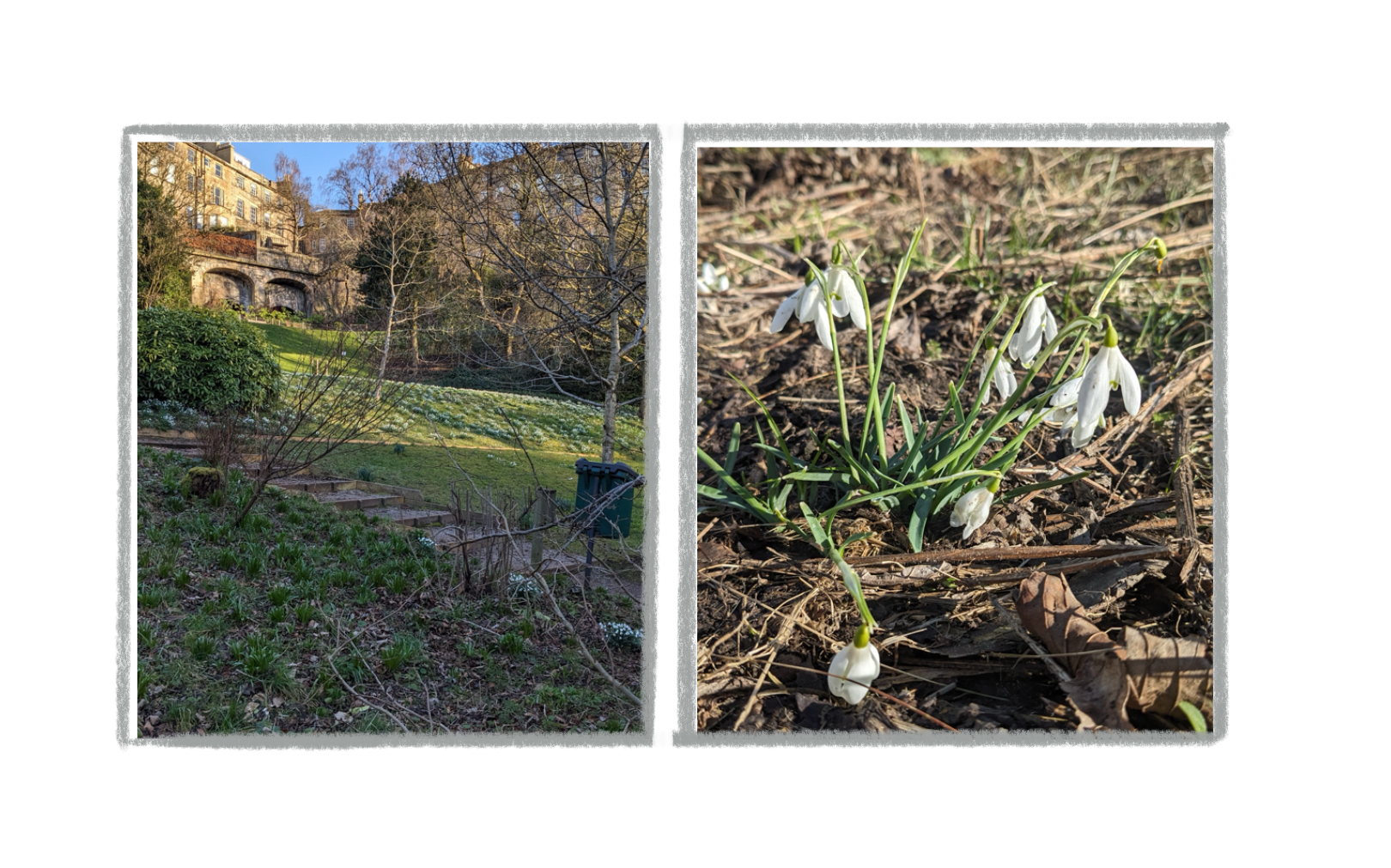
It is such a gorgeous time, I wish I could bottle it. I feel this way when I see the snowdrops, starting to wilt and wane, now. I wish they could stick around forever.

It is impossible not to highlight the pleasant and unexpected surprise it has been to see the Blackthorn blossoms. On a recent walk, I had to do a double take to see that there were, indeed, tree blossoms, in February! Now I see them everywhere.
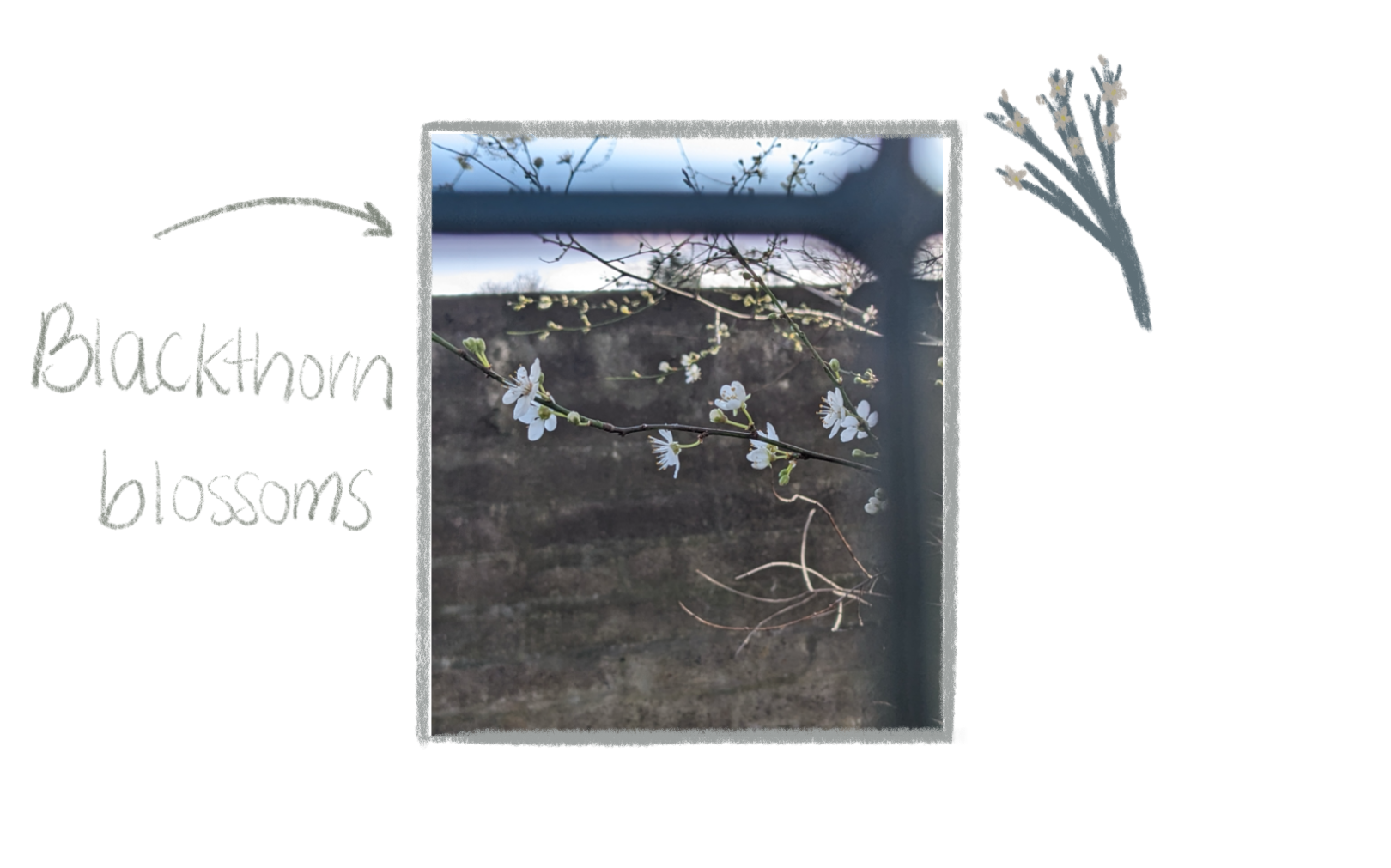
The Blackthorn, Prunus Spinosa, comes from the family of stone fruit trees, as it produces fruit commonly used in making gin - these dark purple berries are called sloes! So, while they resemble hawthorns in bloom, they’re actually rather distantly related. Blackthorns are small, bushy trees, with a strong, very dark wood often used for walking sticks. At this time of year, they’ll catch the eye mostly for their dense white blossoms. So, keep a look out for white flowers and dark branches, and you’ll find yourself some blackthorns in no time.
Honourable Mention: The only reason Blackthorn wins out for pride of place is because it caught me by surprise. The Crocus, on the other hand, has been announcing its arrival for a few microseasons now. As the snowdrops begin to fade, we have entered into Crocus-time: a short-lived season, but one that paints the local paths in purple and yellow.

The redwings’ time wintering in the UK is finally coming to an end - they’ll start to journey home, across the North Sea to Iceland or Scandinavia in mid-late March. If you want to see a wild, if complicated, migration map, look no further. I first spotted the redwings in our local area in early January, though more recently, they’ve become common visitors to our local park. We have been known to bring the binoculars into the kitchen to see them up close, and probably look slightly nosy.
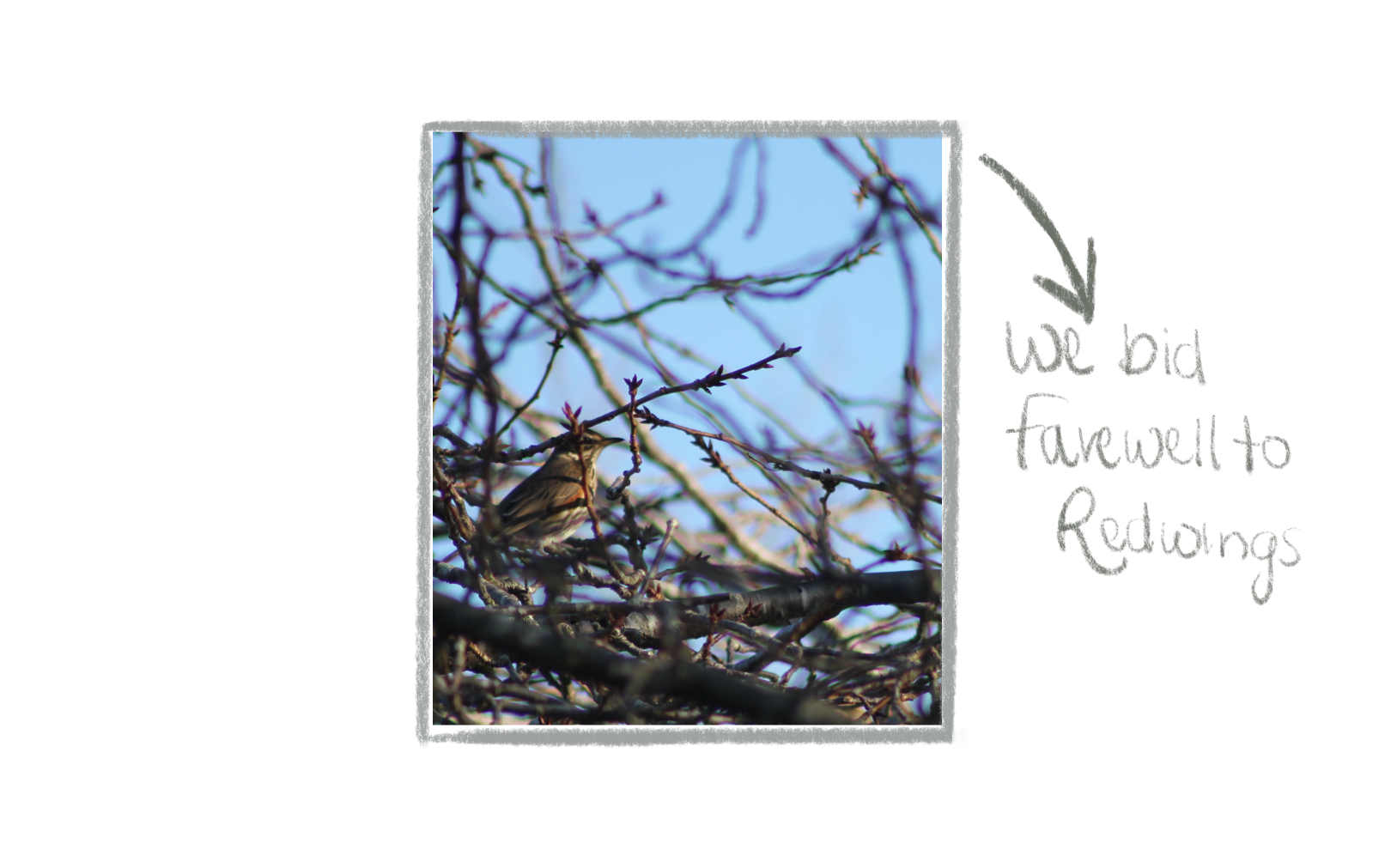
Redwings are the smallest of the thrush family - one that includes birds such as the fieldfare, which you might come across around this time as well. We’ve recently discovered some local song thrushes, though these seem to reside here longer term. I wasn’t all that surprised to learn that the blackbird is also a thrush, as their mannerisms don’t feel too different from the redwings.
Honourable Mention: I was reading recently a fitting description for the increasing chorus of birds I’ve been hearing on my walks. It made me think, I’m not imagining this, there are more of them!
The thin, lonely voice of the garden robin, a winter stalwart, has company now. Great tits, newly energised, tea-cher-tea-cher-ing for all they’re worth; the indeterminate scrabble of a dunnock in the bush by the bus station; the tickly-tickly-tickly of a goldfinch above the traffic rumble of West Norwood high street. Source

A lake pigment is complicated to explain - especially for someone with little background or knowledge in chemistry.
It starts with a dye - a colour suspended in a liquid, usually through soaking/simmering colourful things (“dyestuff”). A dye can be used as-is for soaking and colouring fabric and paper, however it can also be made into a powdered pigment used in making and mulling paint.
To do this, you add a mordant - usually a metallic salt, such as alum - which binds to the dye particles and helps to brighten colours. The you add soda ash, which makes these dye particles insoluble in water. The reaction causes the dye to fizz, then separate.
Once the pigment settles, you can pour out the excess water, and strain the rest through a coffee filter. Leave the pigment to dry fully, then grind into a powder using a mortar and pestle. Voila! A lake pigment!
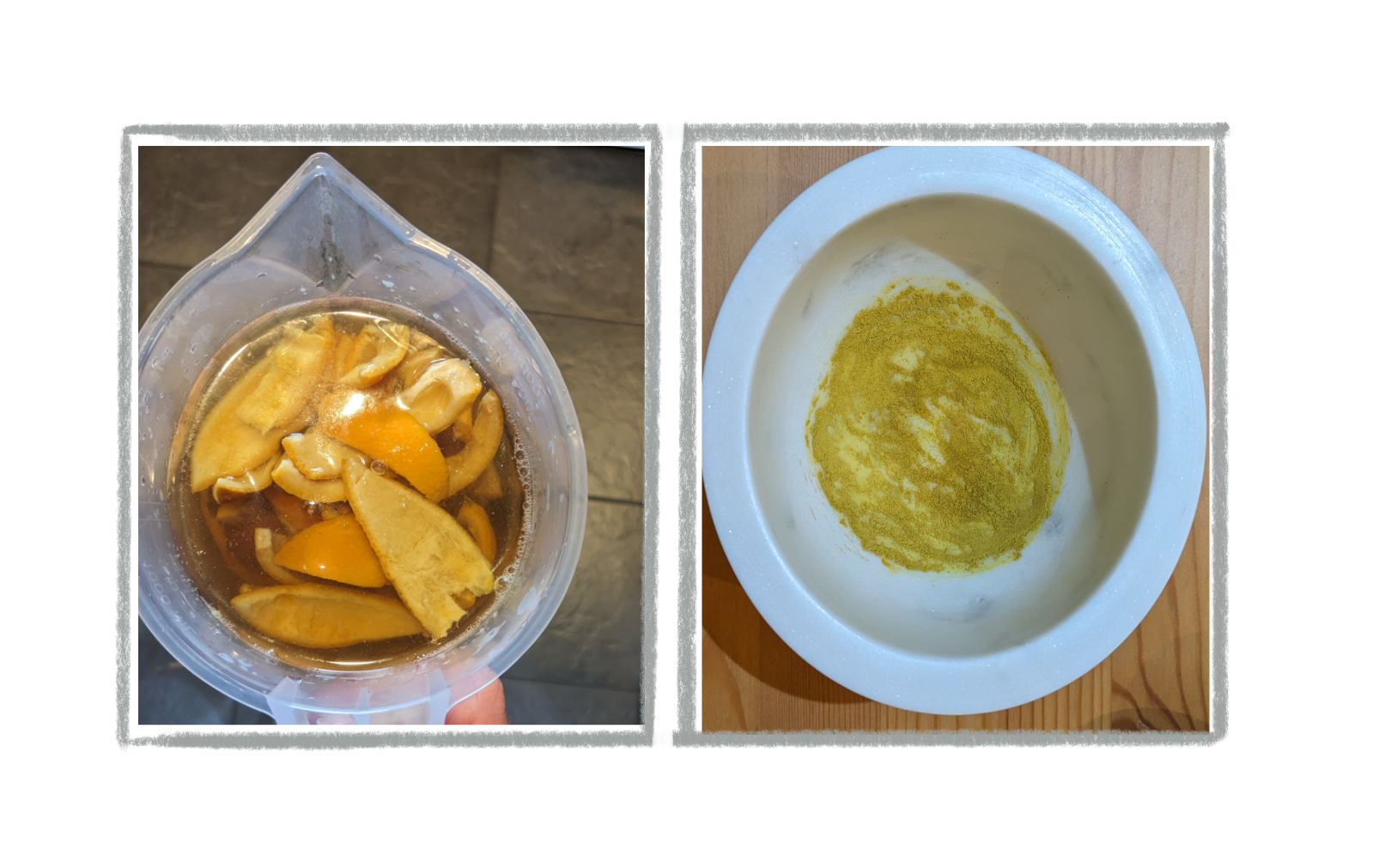
Here is a small bit of pigment I extracted from blood oranges: