


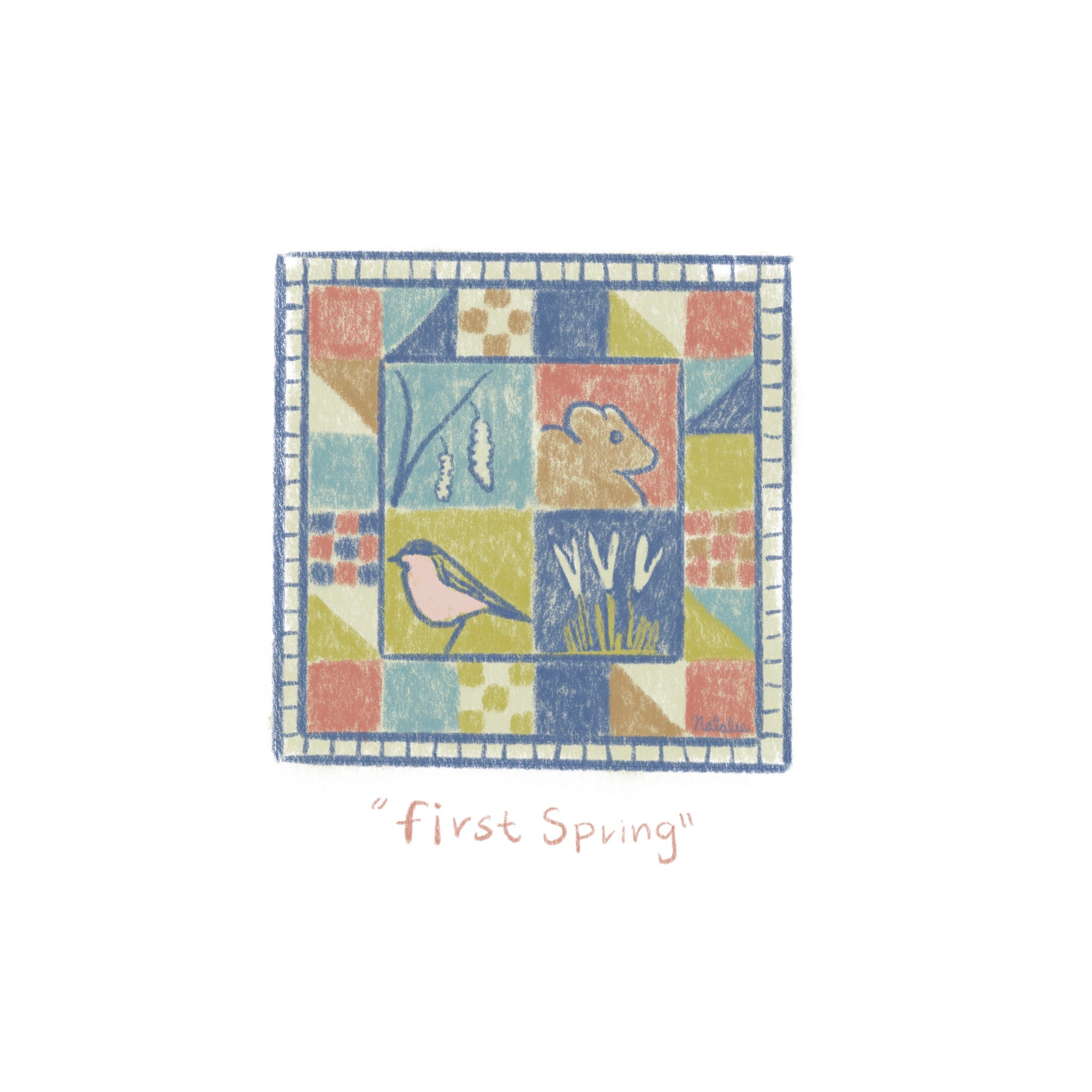
Hello, and thanks for reading my newsletter on the things I’ve noticed, enjoyed, and spent time drawing lately, according to the seasons.
I send these letters out every fortnight (every three Microseasons, if you want to get technical), with about 6 newsletters a season. You’re reading the first installment of Spring - I call this ‘First Spring’, or the Japanese season Risshun - ‘Beginning of Spring’.
You may notice things look a bit different this time - this newsletter is getting a bit of a ‘Spring Cleaning’ of sorts, with new banners, frames, and other visually-pleasing elements - tell me what you think!

I’ll be honest, it’s not felt so much like ‘Spring’ this past week - a rather gloomy, cold one - resulting even in some short-lived snow flurries at the time of writing this. Still, it feels like a time when things are growing, offering a nice ‘antidote’ of colour even in spite of the chill - that's the way Lev Parikian describes it, and it rings true.
I’ve been trying to get outside regularly, though it does feel like bracing the elements sometimes out of routine, rather than inspiration!
Still, I’ve been rewarded by some great days of 'birding - particularly for bullfinches - it seems like we’re entering into a sweet spot, where the birds are becoming more active, while still mostly visible in the bare tree-tops.

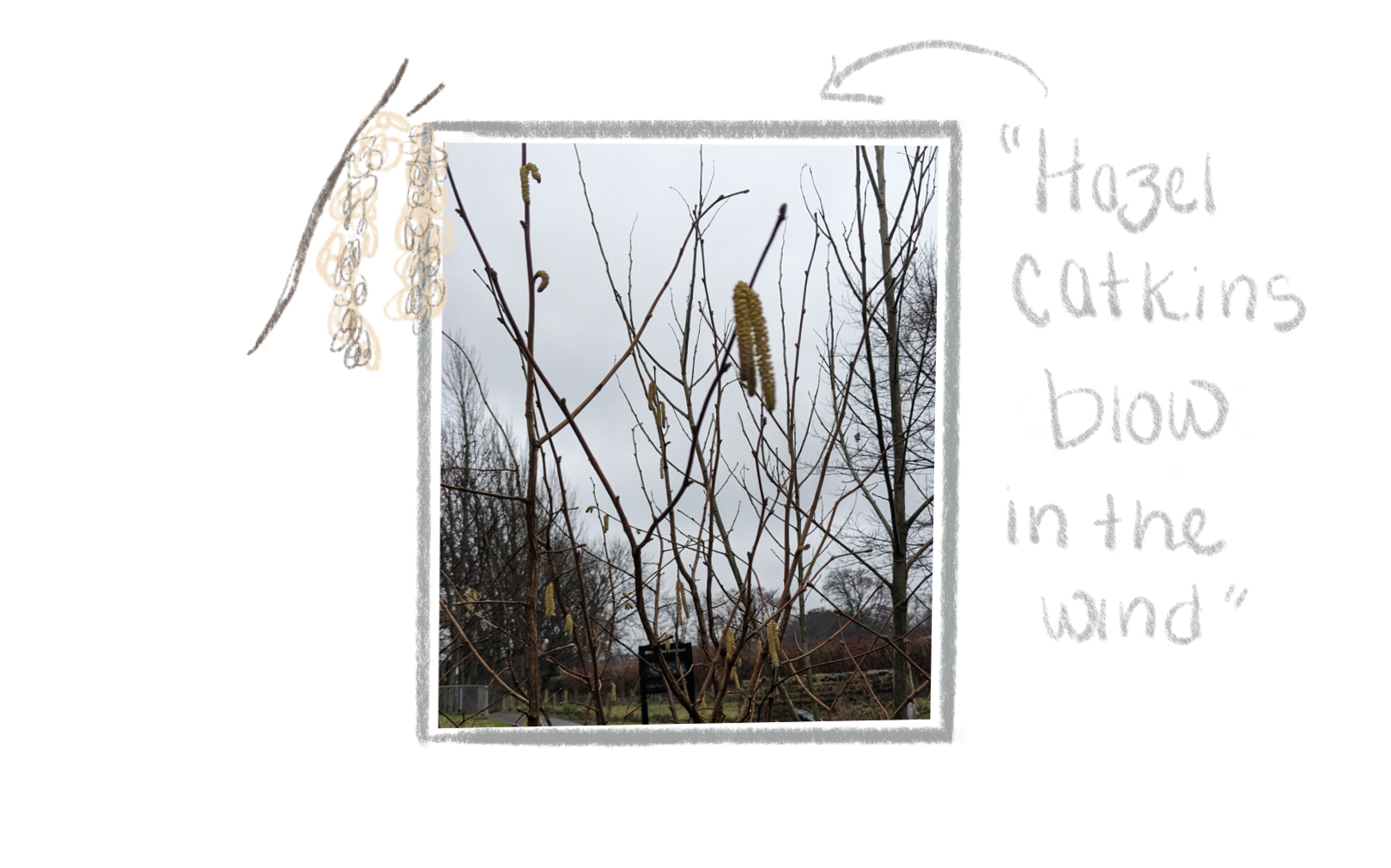
I’m dedicating this flora section to the Hazel catkin, which has caught my attention during recent walks. Like most things, once you know to look for it, it’s easy to see everywhere. While I recalled reading about these catkins in last year’s reading of Nature’s Calendar, I realised I had little inkling what a catkin was and why they seem more visible here in the earliest moments of Spring. Here’s what I’ve learned:
The Hazel tree (Coryllus Avellana) is a monoecious tree, which means that it has both male and female flowers and can produce fruit without pollination of another tree. The catkin is the male flower of the Hazel tree, while the small red female flower first appears in early Spring. Because there are no insects around at this time of the year, the Hazel requires a strong wind to pollinate. The catkins begin to develop as early as summer, though they do not reach their maturity until the cold, blustery first days of the new year.
Honourable Mention: Leopard’s Bane is one of the first perennial flowers to appear along the Water of Leith. Even now, amongst the early signs of wild leek and cow parsley, you can spot their leaves developing.

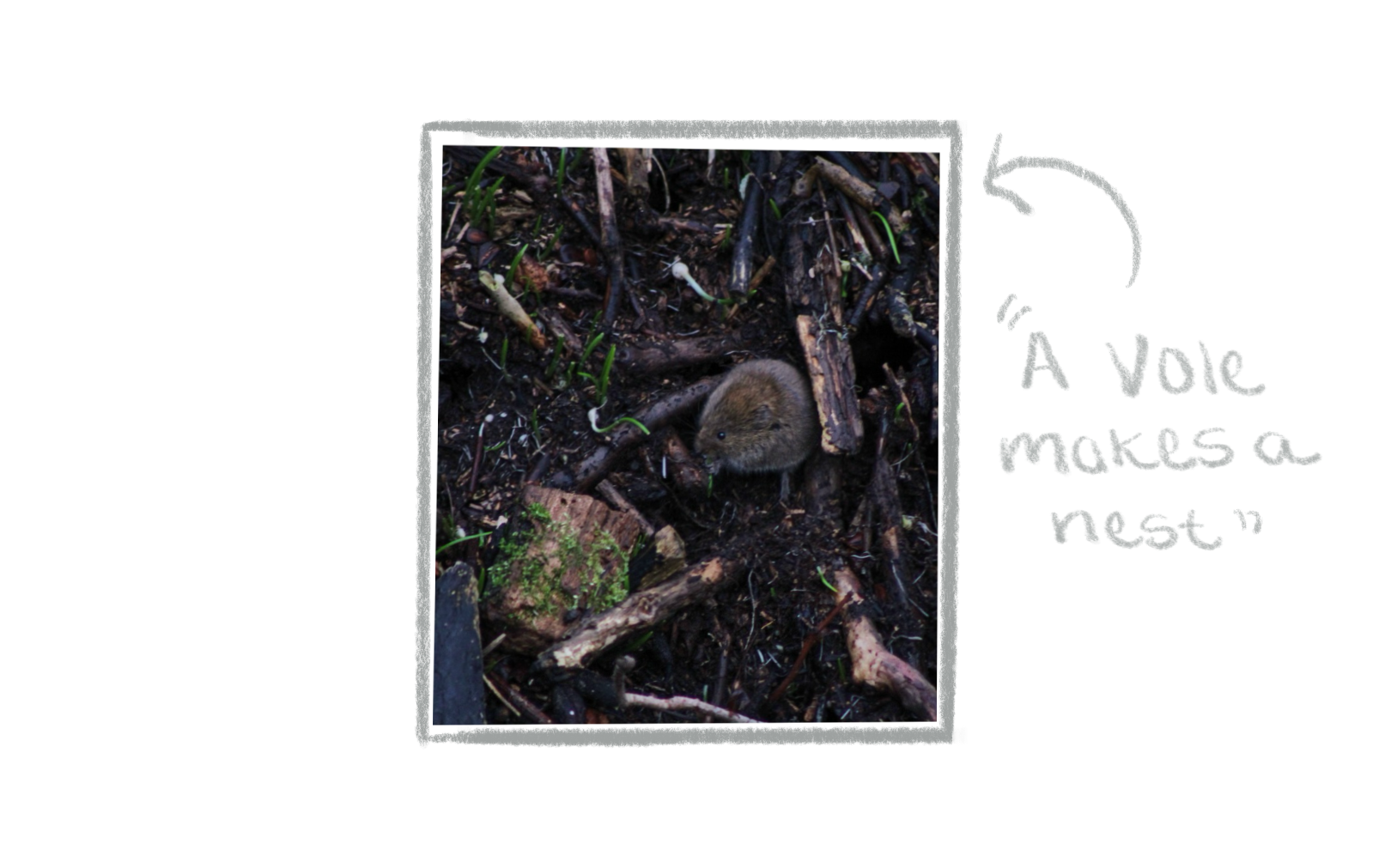
The fauna highlight of this newsletter is borrowed from my husband, Nathanael, who photographed this cute vole, who appeared to be making a nest along the Water of Leith.
Judging by its habitat, this very well might be the endangered water vole (Arvicola Amphibius), who build their burrows along waterways as a means of protection against predators. Sadly, a loss in habit, pollution, and the introduction of the American Mink, has reduced the water vole population by nearly 90% in the past half century.
This vole very well might be preparing for the upcoming breeding season, which usually begins around March-time.
Honourable Mention: A close contender were the bullfinches I’ve seen rather regularly on walks these past weeks. I’ve begun to recognise their call, which I think has quite a unique and recognisable tone.

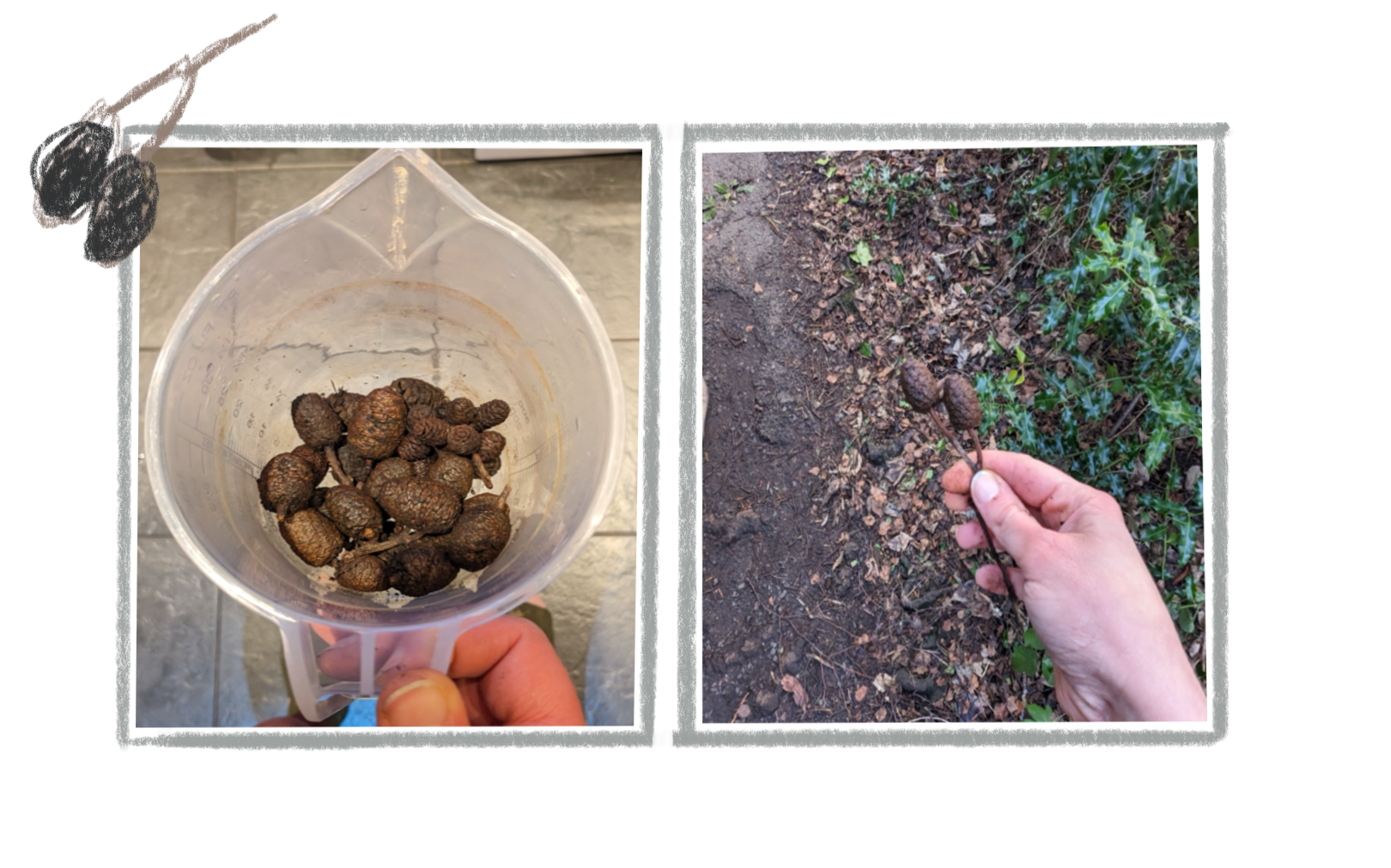
A new addition to this newsletter is a ‘Pigment’ section, as I’ve really enjoyed learning and experimenting with natural colour recently. I thought this could be a place to share about a particular pigment, technique, or process in creating colour from nature, ideally in its proper season.
This month, I’ve been collecting alder cones, fallen during our recent storm. Alder (Alnus Glutinosa) is perhaps the most readily-available material for a beautiful, natural dark brown ink.
Cones generally are particularly high in tannins - that same ingredient that characterises the taste of tea and red wine. These are also great for creating a durable colour and a helpful addition for dyeing plant-based materials.
A quick Google search also revealed a funny reddit thread about people’s aquariums being dyed brown after adding alder cones - apparently this is helpful in lowering the PH level of the water and replicating the darker tint of some environments!
Here is a recipe for Alder ink, if you're keen to give it a go!
Alder Cone Ink Recipe
Collect 100g of alder cones and twigs
Soak in 1 litre water overnight
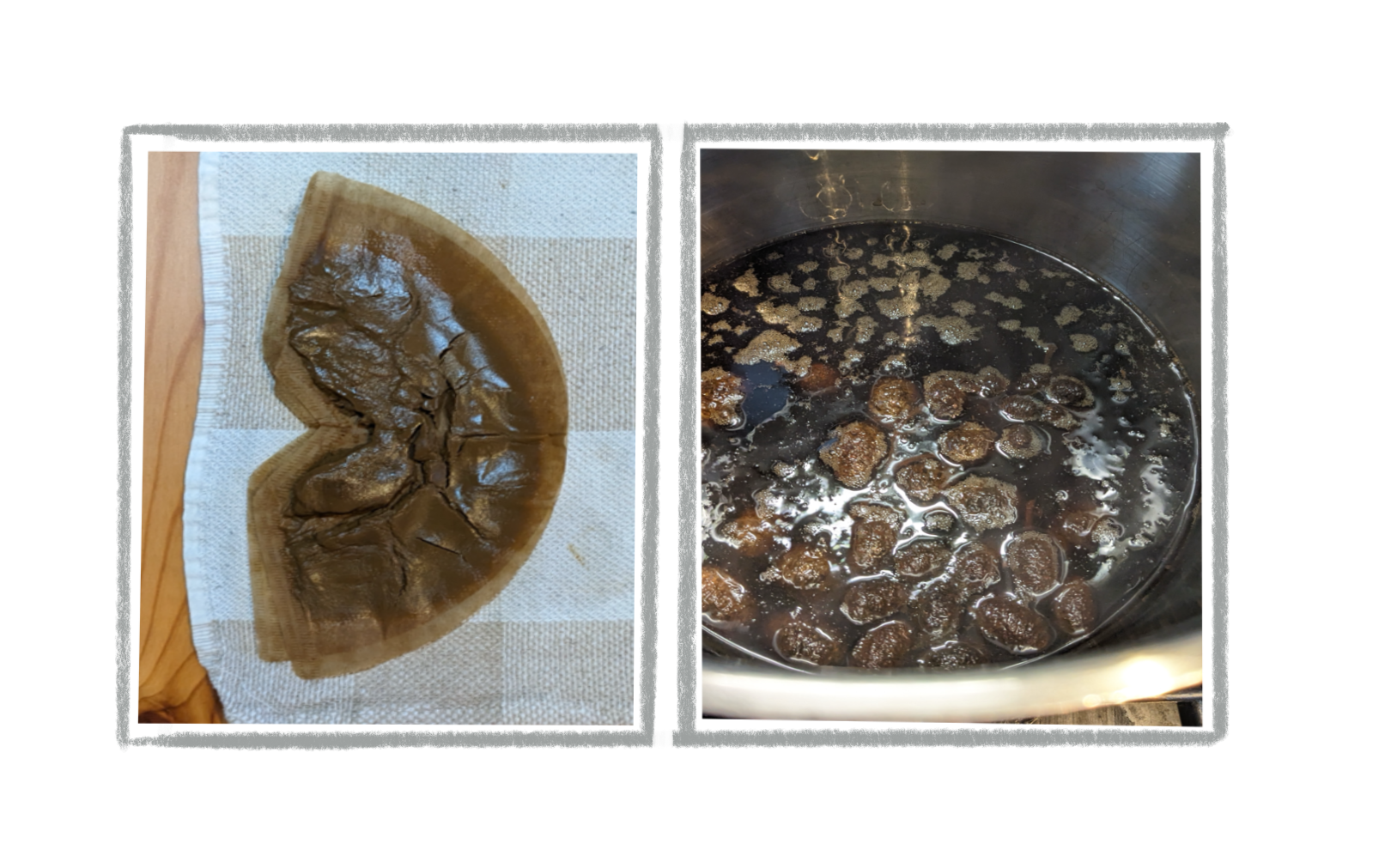
Simmer in a dye pot for 1 hour
Strain out dye materials through a coffee filter.
*Combine with a teaspoon of Gum Arabic for best results, as it helps with binding and preserving
I am currently in the process of transforming some of my alder inks into lake pigments - another fascinating chemistry experiment that will require its own newsletter sometime soon.
That’s all for now - I hope you enjoy this longer-form edition of the Microseason Newsletter. Until next time,
I always enjoy the newsletter ❤️❤️